

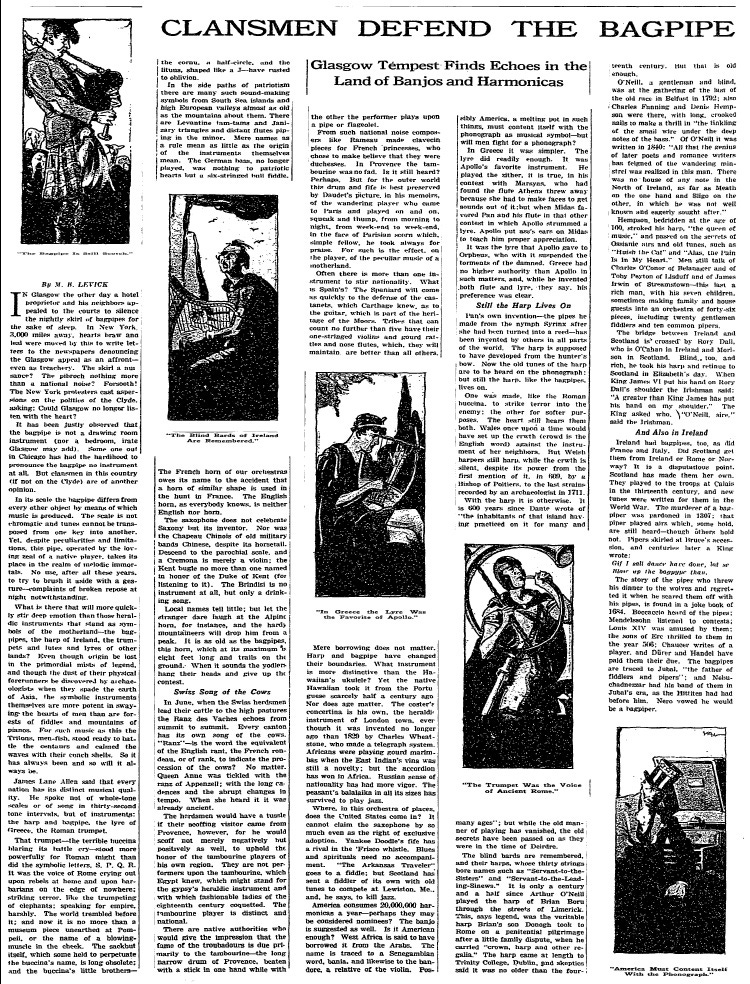
A 1926 New York Times Magazine headline used the word “clansmen” to mean people from Scotland. That’s almost impossible to imagine occurring in an American publication today, even if it was spelled with a “c" instead of a “k.”
Yes, the history of Scottish clans goes back about 800 years. Wikipedia has a list of hundreds of them.
But to a U.S. audience, the word primarily means something else. I’m actually surprised that NYT Mag would use it in a 1926 headline, when the KKK was far more prominent in American life?
According to Google Books Ngram Viewer, the 1920s was exactly when klansman or klansmen spelled with a ‘k’ first overtook clansman or clansmen spelled with a ‘c’ in books:
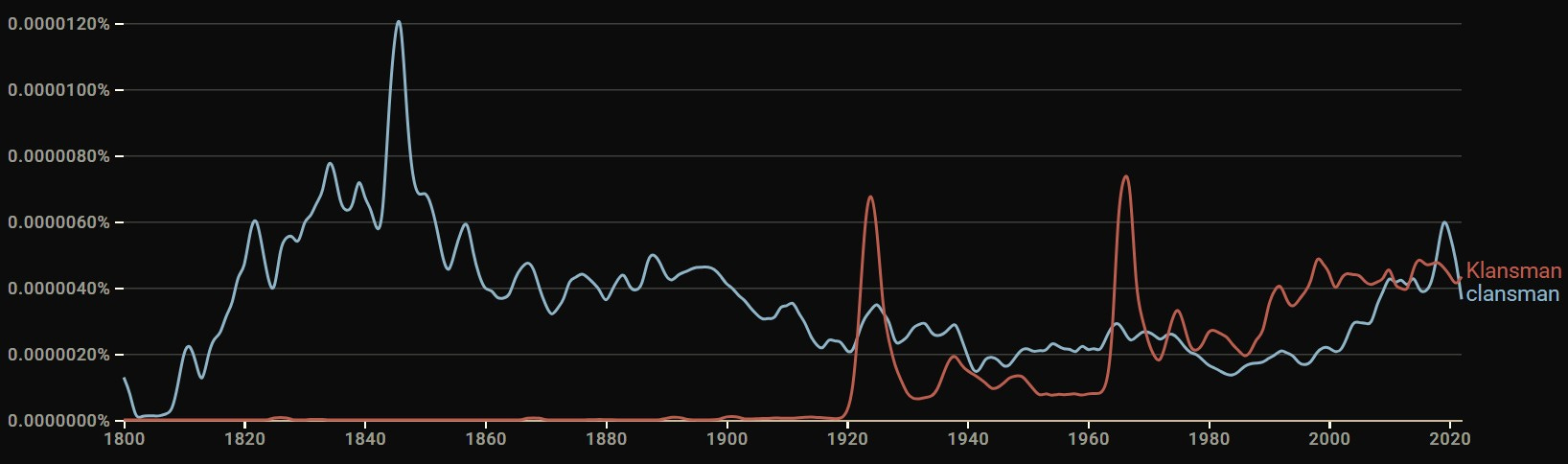
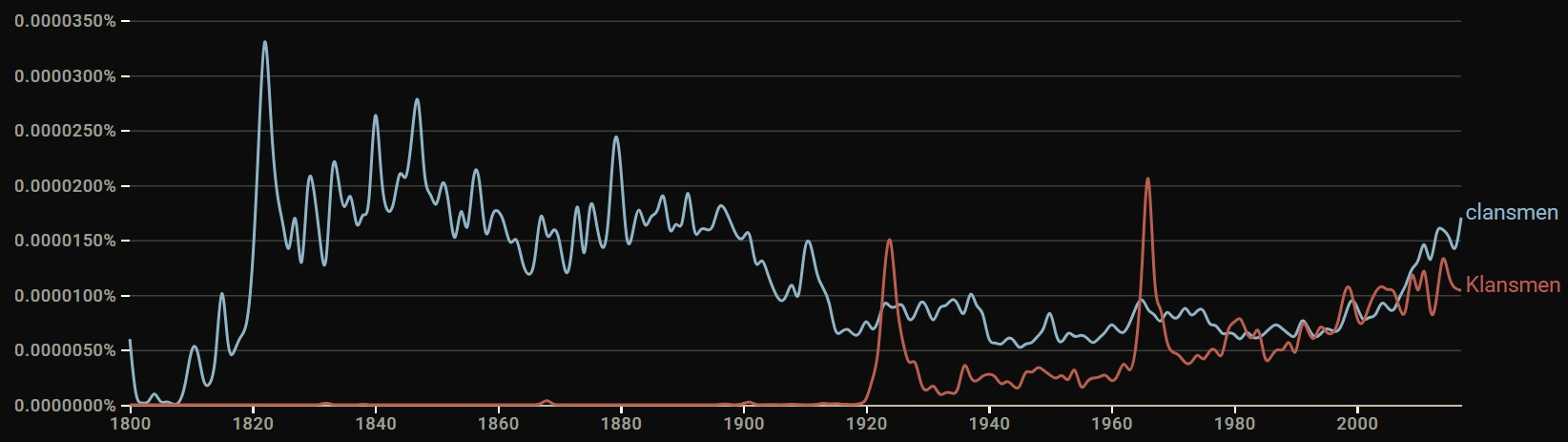
Then the ‘k’ version fell below the ‘c’ version from the 1930s through early 1960s, but has largely ranked above it almost every year since the mid-’60s. (A trend that’s more noticeable in the first graph which charts the singular words, rather than the second graph which charts the plural versions.)
As for the 1926 article itself, journalist M.B. Levick described how and why the bagpipes continued in Scotland, even as some other “national instruments” had faded.
The German bass, no longer played, was nothing to patriotic hearts but a six-stringed bull fiddle.
…
[But] what is there that will more quickly stir deep emotion than those heraldic instruments that stand as symbols of the motherland, [such as] the bagpipes? Even though origin be lost in the primordial mists of legend… the symbolic instruments themselves are more potent in swaying the hearts of men than are forests of fiddles and mountains of pianos.
Clansmen Defend the Bagpipe: Glasgow Tempest Finds Echoes in the Land of Banjos and Harmonicas
Published: Sunday, March 28, 1926