

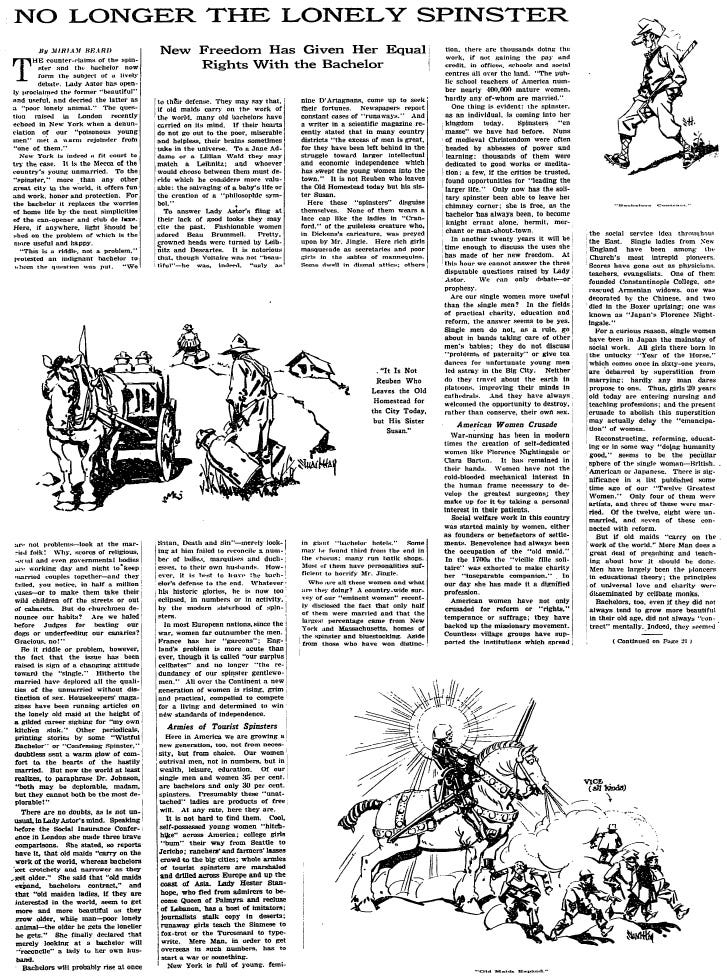
Unmarried women in the 1920s were living fundamentally different lives than unmarried women of prior eras, wrote a 1926 New York Times Magazine article: going out, having fun, and rejecting earlier generations’ “spinster” status.
The journalist Miriam Beard wrote:
Who are all these women and what are they doing? … Aside from those who have won distinction, there are thousands doing the work, if not gaining the pay and credit, in offices, schools, and social centres [sic] all over the land.
…
One thing is evident: the spinster, as an individual, is coming into her kingdom today. Spinsters “en masse” we have had before. Nuns of medieval Christendom were often headed by abbesses of power and learning; thousands of them were dedicated to good works or meditation; a few, if the critics be trusted, found opportunities for “leading the larger life.” Only now has the solitary spinster been able to leave her chimney corner; she is free as the bachelor has always been, to become knight errant alone, hermit, merchant, or man-about-town.
Google Books Ngram Viewer allows you to chart the frequency of words or phrases in books over time. Indeed, it clearly shows the word “spinster” had plummeted from its all-time peak in 1911 to less than one-quarter of that by 1925.
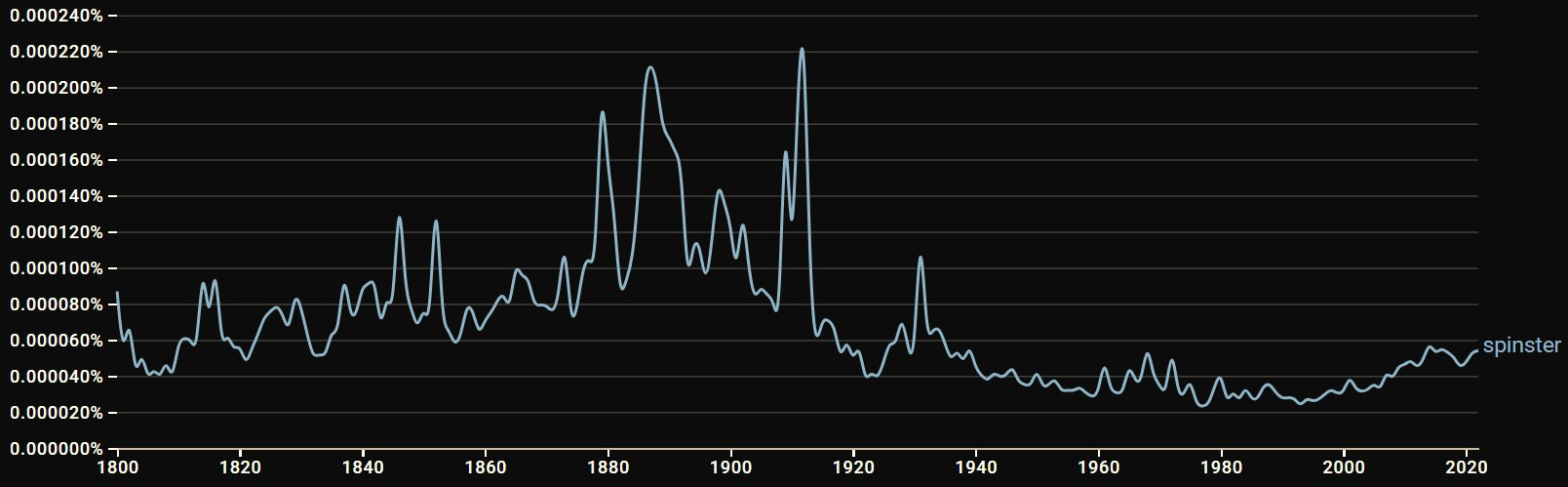
But an interesting phenomenon has recently occurred: after staying relatively flat from approximately the 1940s through 2000s, the word “spinster” has started to pick up somewhat in the 2010s and 2020s. Only a bit, not surging, but still: the trend is clear. Indeed, 2022 – the most recent year for which Google Books has data – saw the highest usage of “spinster” since exactly 50 years prior: 1972.
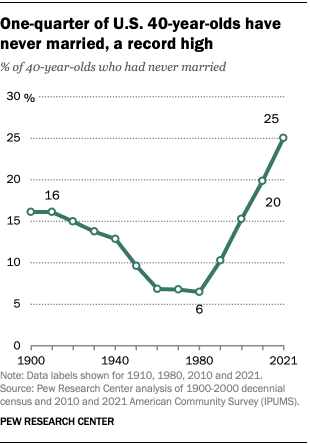
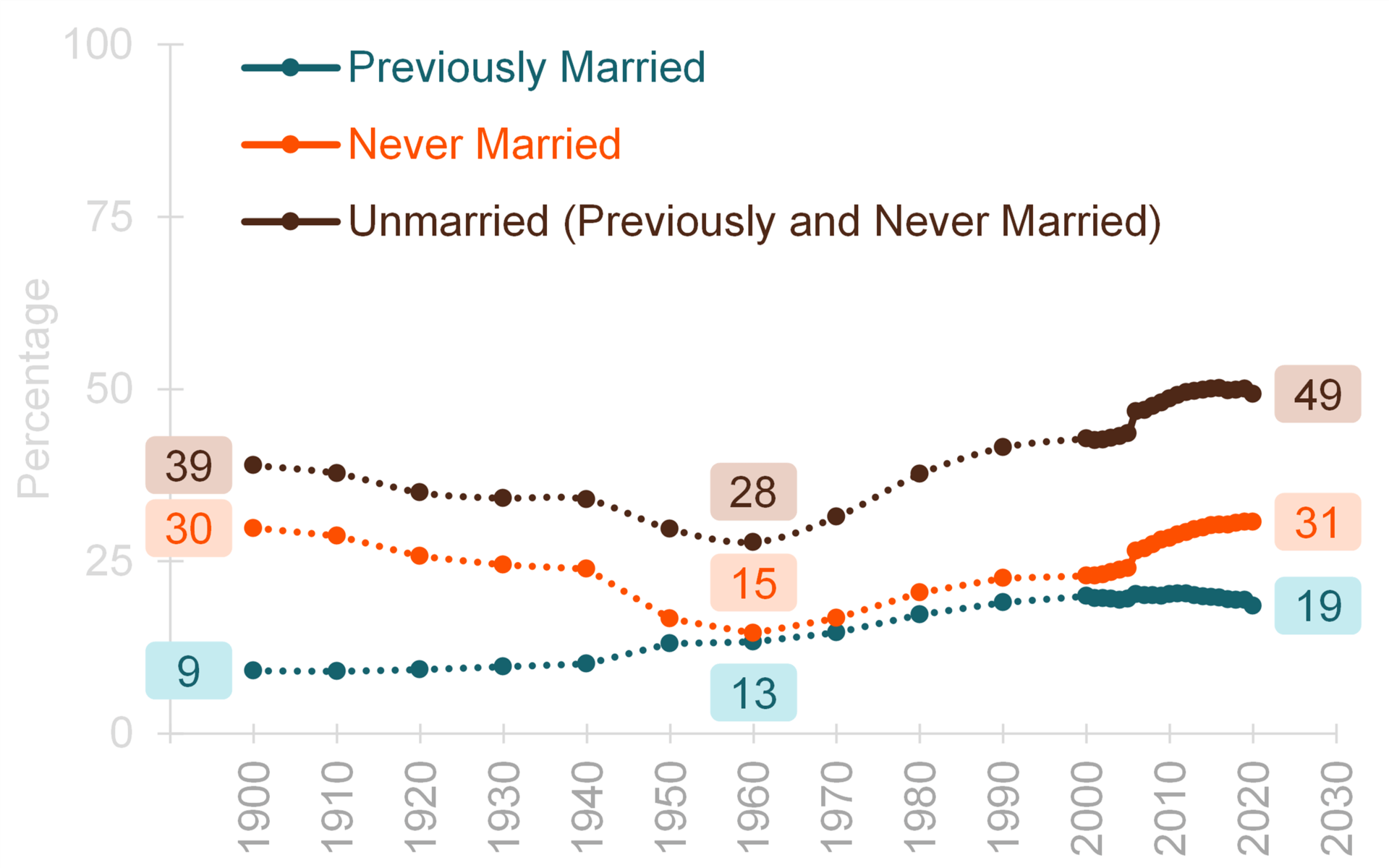
Not coincidentally, this coincides with the considerable rise in unmarried people and unmarried women during the 2010s and 2020s: see here and here for two graphs depicting the change.
No Longer the Lonely Spinster: New Freedom Has Given Her Equal Rights With the Bachelor
Published: Sunday, January 3, 1926